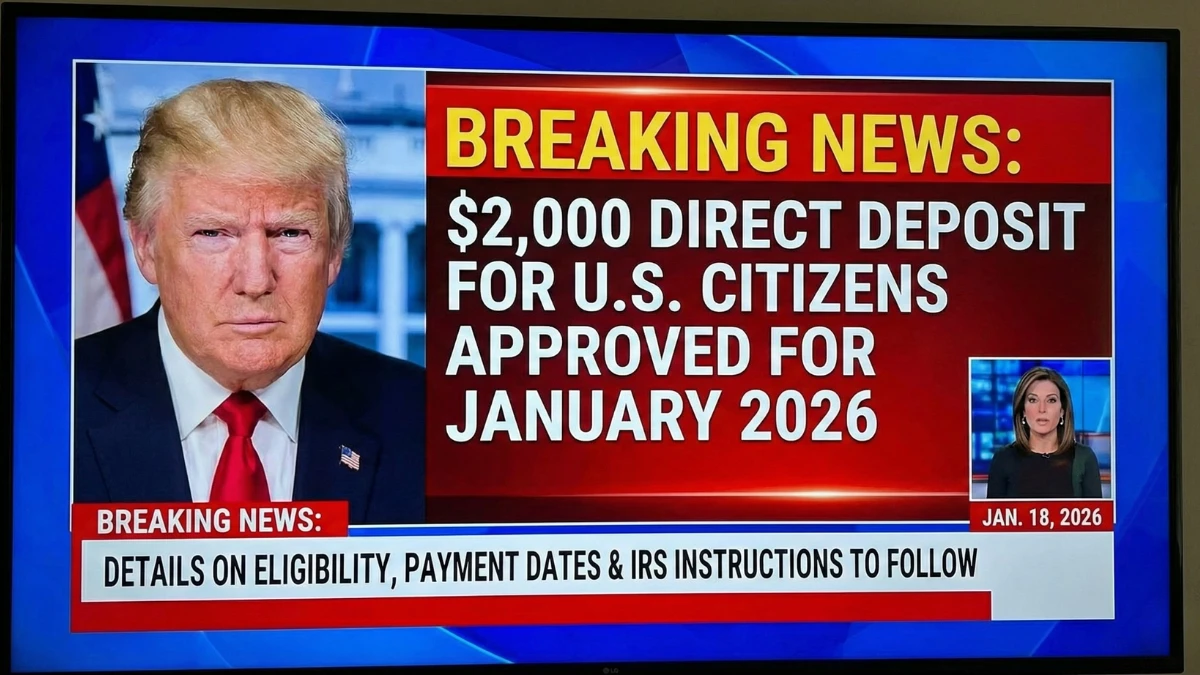
$2,000 Direct Deposit :As January 2026 arrives, many Americans are starting the year with mixed emotions – a blend of renewed hope and lingering financial pressures. Holiday spending, rent, medical bills, and rising everyday expenses often make the first month of the year particularly challenging. Amidst this, news of a $2,000 direct deposit in January 2026 has captured national attention, leaving people curious, confused, and searching for clear answers.
So, what’s the truth behind this $2,000 deposit? Let’s break it down in a simple, honest, and straightforward way.
Is a new $2,000 direct deposit coming for everyone?
First, it’s important to know that there is no officially announced nationwide stimulus payment of $2,000 for all American citizens in January 2026. The IRS and the federal government have not authorized any new checks similar to the universal relief checks issued during the pandemic.
However, this doesn’t mean the idea is entirely unfounded. Many Americans are receiving deposits of around $2,000 or more, but these payments are coming from existing federal programs, not from any new stimulus legislation. This is where most of the confusion stems from.
Why are people receiving $2,000 deposits in January?
January is one of the busiest months for federal payments. Several legitimate deposits are issued during this time, and when combined, they often total around $2,000.
Common reasons include:
- Early IRS tax refunds for the 2025 tax year
- Refundable tax credits that increase the refund amount
- Social Security, SSI, or SSDI payments
- IRS corrections or delayed payments from previous returns
When these deposits arrive, many people mistakenly believe it’s a special one-time payment, when in reality, it’s money they were already entitled to receive.
Who May Be Eligible for a $2,000 Deposit in January 2026?
Eligibility depends on the type of payment, not simply citizenship. Below are the most common groups who may see deposits around $2,000.
1. Early Tax Filers
Taxpayers who file their 2025 federal tax returns early and are owed a refund may receive their payment in January. Refund amounts vary, but many exceed $2,000 due to overpaid taxes or credits.
2. Earned Income Tax Credit (EITC) Recipients
Low- and moderate-income workers who qualify for the EITC often receive larger refunds, sometimes crossing the $2,000 mark.
3. Child Tax Credit (CTC) Beneficiaries
Families with eligible children may see increased refunds because parts of the Child Tax Credit are refundable.
4. Social Security and SSI Recipients
Monthly benefits continue on schedule in January. While these are not IRS payments, some beneficiaries’ total monthly income may be close to $2,000.
5. IRS Adjustments or Back Payments
If the IRS corrects an earlier return or releases delayed credits, a one-time deposit may be issued.
Potential Payment Dates in January 2026
There is no single payment date for the $2,000 deposit. The timing depends on where the payment is coming from:
- Early January: SSI and certain federal benefits (adjusted for holidays)
- Mid-January: The IRS will begin accepting and processing tax returns
- Mid-to-late January: The first wave of direct deposit tax refunds
- Up to 21 days: The typical IRS refund processing time
Those who choose direct deposit generally receive their money faster than those waiting for a paper check.
IRS Instructions: What You Should Do
To avoid delays and misinformation, the IRS recommends a few simple steps:
-
File your tax return early and accurately
-
Choose direct deposit as your refund method
-
Double-check bank account and routing numbers
-
Track your refund using official IRS tools only
Most importantly, stay alert to scams. The IRS will never contact you by text, email, or social media asking for personal or banking details.
Final Thoughts
A $2,000 direct deposit in January 2026 isn’t a new government handout—but it is very real money for millions of Americans. Whether it arrives as a tax refund, a refundable credit, or a benefit payment, it represents support already built into the federal system.
Understanding the source of your payment replaces speculation with clarity. By staying informed, filing early, and relying on official IRS guidance, you can start 2026 with confidence—and enjoy a little extra financial peace of mind when you need it most.